New Mexico’s monsoon season doesn’t sneak up on anyone who’s been through a few of them — the pattern is reliable enough that you can basically set a calendar reminder. What a lot of RVers don’t do, though, is actually use that predictability to get ahead of it. A thorough roof, sealant, and awning check in the weeks before monsoon activity ramps up is the difference between weathering the season without incident and discovering a slow leak three storms in.
Why Roof and Sealant Condition Matters So Much for Monsoon Season
An RV roof and its sealant are the primary barrier between your interior and whatever the sky is doing, and monsoon storms specifically stress-test that barrier in ways that gentler rain doesn’t. Monsoon rainfall often arrives in short, intense bursts rather than the steady, moderate rain common in other climates, meaning water can pool briefly on a roof or run in unusual patterns before draining, testing seals and seams under conditions they might not face during a typical light rain. Combine that with the wind that frequently accompanies monsoon thunderstorms, and any marginal sealant or roof issue that’s been slowly developing over a dry New Mexico spring gets a genuine stress test the first time a real storm hits.
The Roof Inspection: What to Actually Look For
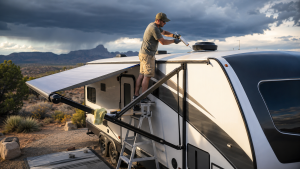
A thorough pre-monsoon roof inspection means physically getting up on the roof (safely, following your rig’s specific access and weight guidance) and inspecting the entire surface, not just glancing at it from the ladder. Look specifically for any soft spots underfoot, which can indicate water intrusion into the roof decking beneath the membrane — this is a serious finding that generally warrants professional evaluation rather than a DIY fix. Check for any visible tears, punctures, or de-lamination in the roof membrane itself, particularly around any roof-mounted equipment like AC units, vents, or antennas, since these penetrations are consistently the most common failure points on any RV roof.
Seams and Penetrations
Every seam where roof sections meet, and every point where something penetrates the roof — vents, AC units, skylights, antenna mounts, slide-out toppers — is a specific vulnerability that deserves individual attention rather than a general glance. Inspect the sealant around each of these points specifically, looking for cracking, shrinkage, gaps, or areas where the sealant has pulled away from either the roof surface or the fixture itself. Even a small gap at one of these points is a direct pathway for water intrusion during a heavy monsoon downpour.
“People think of roof problems as something dramatic — a big tear, an obvious hole. Most of the actual leaks we see start as something tiny around a vent or an AC unit that’s been slowly failing for months. By the time someone notices a stain on the ceiling inside, the damage has usually been building for a while already.”
Sealant Maintenance: Knowing When to Reapply
RV roof sealants degrade over time from UV exposure, temperature cycling, and general weathering, and New Mexico’s intense high-altitude sun accelerates this degradation more than a milder climate would. Most manufacturers and RV maintenance guides recommend inspecting sealant at least twice a year, with many experienced RVers checking more frequently, and specifically before a season with elevated moisture exposure like the monsoon window is exactly the right timing for an inspection even if you’re not on a strict biannual schedule otherwise.
Signs Sealant Needs Attention
Visible cracking, a chalky or crumbling texture when touched, gaps where the sealant has separated from the surface, or any area where old sealant looks noticeably different in color or texture from a fresh application are all signs that a section needs to be addressed. When resealing, removing old, degraded sealant completely before applying new product, rather than simply applying new sealant over failing old sealant, gives the new material proper adhesion and is the approach most RV maintenance guides recommend for a lasting repair rather than a temporary patch.
Matching Sealant Type to Your Roof
Different RV roof materials — rubber (EPDM or TPO), fiberglass, and aluminum — require different sealant formulations, and using the wrong type can actually cause damage rather than provide protection, particularly with certain sealants that aren’t compatible with rubber roofing membranes. Confirming your specific roof material and using a sealant product formulated for it, rather than grabbing a generic caulk, is an important detail that’s easy to get wrong if you’re newer to RV maintenance.
Awning Inspection and Care Before Storm Season
Awnings face their own specific monsoon vulnerability: wind. A monsoon thunderstorm’s gusty winds can catch a deployed awning and cause real damage — bent or broken arms, torn fabric, or in severe cases, an awning ripped partially or fully off the RV. Before monsoon season ramps up, inspect your awning’s fabric for any existing tears, weak spots, or UV degradation that might make it more vulnerable to wind stress than a fresh awning would be. Check the awning arms and hardware for any looseness, corrosion, or damage that could fail under wind load.
The Single Most Important Awning Habit
Beyond the physical inspection, the single most protective habit for monsoon season is simply retracting your awning proactively whenever a storm is developing, rather than waiting to see how bad it gets. Checking the forecast each morning and again in the early afternoon during monsoon season, and retracting the awning at the first sign of building storm clouds rather than after wind has already picked up, prevents the vast majority of monsoon-related awning damage. This single habit, more than any specific hardware upgrade, is what protects most awnings through a full monsoon season without incident.
For the broader picture of what monsoon season actually looks like on the ground and how to watch it safely from your RV site, the New Mexico monsoon season RV storm watching guide covers the safety and viewing side of the same seasonal pattern this maintenance checklist is prepping you for.
Building a Simple Pre-Monsoon Checklist Routine
The practical approach that works well: set aside a specific weekend in late June or early July, before the monsoon pattern typically ramps up in earnest, to do a full roof, sealant, and awning inspection rather than trying to squeeze it in reactively once storms have already started. Address anything you find immediately rather than making a mental note to deal with it later — a small sealant gap that gets caught and fixed in June is a five-minute job; the same gap ignored through a full monsoon season can turn into a genuine interior water damage repair.
Roof: full walk-inspection (safely, per your rig’s weight guidance). Check for soft spots (water intrusion — needs professional evaluation), tears, punctures, de-lamination.
Seams and penetrations: inspect every seam and every roof-mounted fixture (vents, AC, skylights, antennas, slide toppers) individually for sealant cracking, shrinkage, or gaps.
Sealant: inspect at least twice yearly, more before monsoon season specifically. Remove old degraded sealant fully before reapplying — don’t layer new over failing old.
Sealant type: match the product to your specific roof material (EPDM/TPO rubber, fiberglass, aluminum) — wrong type can cause damage.
Awning: inspect fabric for tears/UV degradation, check arms/hardware for looseness or corrosion.
Habit that matters most: retract the awning proactively at the first sign of a developing storm — check forecast morning and early afternoon during monsoon season.
Timing: do the full inspection in late June/early July, before monsoon activity ramps up. Fix small issues immediately.
For guests planning a New Mexico summer stay who want the broader seasonal picture beyond maintenance, the New Mexico RV travel and planning guide covers the wider regional context for a monsoon-season visit. And for booking any Albuquerque-area summer stay, Albuquerque RV Park is the starting point.
Frequently Asked Questions
How often should I inspect my RV roof sealant?
Most manufacturers and RV maintenance guides recommend inspecting roof sealant at least twice a year, though many experienced RVers check more frequently, particularly before a season with elevated moisture exposure. In New Mexico specifically, checking sealant condition in the weeks before monsoon season ramps up in early July is a practical addition to a regular inspection schedule, since intense high-altitude UV exposure accelerates sealant degradation faster than in milder climates. Signs that sealant needs attention include visible cracking, a chalky or crumbling texture, and gaps where the sealant has separated from the roof surface or a fixture.
What are the most common places for an RV roof to leak?
The most common failure points are around roof penetrations — vents, AC units, skylights, antenna mounts, and slide-out toppers — where sealant around the fixture can crack, shrink, or separate over time from UV exposure and temperature cycling. Roof seams, where individual roof sections meet, are another common vulnerability. Leaks at these specific points often start small and develop gradually, sometimes going unnoticed until a visible interior stain appears, which is why a thorough physical inspection of each penetration and seam individually, rather than a general glance at the roof, is important before a season with heavy rain exposure like the monsoon.
Can I use any sealant on my RV roof?
No. Different RV roof materials — rubber (EPDM or TPO), fiberglass, and aluminum — require different sealant formulations, and using an incompatible sealant type can actually cause damage rather than provide protection, particularly with certain products that aren’t formulated for rubber roofing membranes. Confirming your specific roof material and selecting a sealant product formulated for it, rather than using a generic caulk, is an important step to get right, especially for anyone newer to RV maintenance who might not realize roof materials require different products.
How do I protect my RV awning during monsoon season?
The single most protective habit is retracting your awning proactively at the first sign of a developing storm, rather than waiting to see how severe the weather becomes. Checking the forecast each morning and again in the early afternoon during monsoon season, since storms typically develop with daytime heating, allows you to retract the awning before wind picks up rather than after. Beyond this habit, inspecting the awning fabric for existing tears or UV degradation and checking the arms and hardware for looseness or corrosion before monsoon season begins helps identify any existing weaknesses that could fail under wind stress.
What does a soft spot on my RV roof mean?
A soft spot underfoot while walking on an RV roof typically indicates water intrusion into the roof decking beneath the membrane, where moisture has begun compromising the structural material supporting the roof surface. This is a serious finding that generally warrants professional evaluation rather than a do-it-yourself fix, since it often indicates damage has already progressed beyond a simple sealant repair and may require deeper roof decking repair or replacement. If you find a soft spot during a pre-monsoon inspection, having it evaluated by an RV service professional before monsoon season’s heavy rain arrives is strongly advisable.
When should I do a pre-monsoon RV maintenance check in New Mexico?
Late June or early July, before the New Mexico monsoon pattern typically ramps up in earnest (the season generally runs from early July through mid-September), is the practical window for a thorough roof, sealant, and awning inspection. Doing this check proactively, before storms have already started, allows time to address any issues found — a small sealant gap caught early is a quick fix, while the same issue left unaddressed through a full monsoon season can develop into more significant water damage requiring a much larger repair.