Drive around Albuquerque in the fall and you’ll see them hanging from porches, gate posts and shop doors: long strings of dark red chile, drying in the sun. It’s one of the most recognizable sights in New Mexico, and it’s tied to a harvest that’s happening right now.
If you’re visiting from out of state, a ristra can look like pure decoration. It’s that, but it started as something far more practical. Here’s what a ristra actually is, how it connects to the green chile you’ve been eating all fall, and how to find, hang and use one.
What a Ristra Is
“Ristra” is Spanish for “string,” and that’s all it is: a string of mature red chile pods, tied together and hung to dry. New Mexico State University’s Chile Pepper Institute describes the tradition plainly. New Mexicans have traditionally harvested red chile and strung it into ristras, dried it in the warm sun, and then stored it, still on the string, to use in traditional dishes through the winter. In other words, it’s a pantry on a string, as New Mexico Magazine puts it.
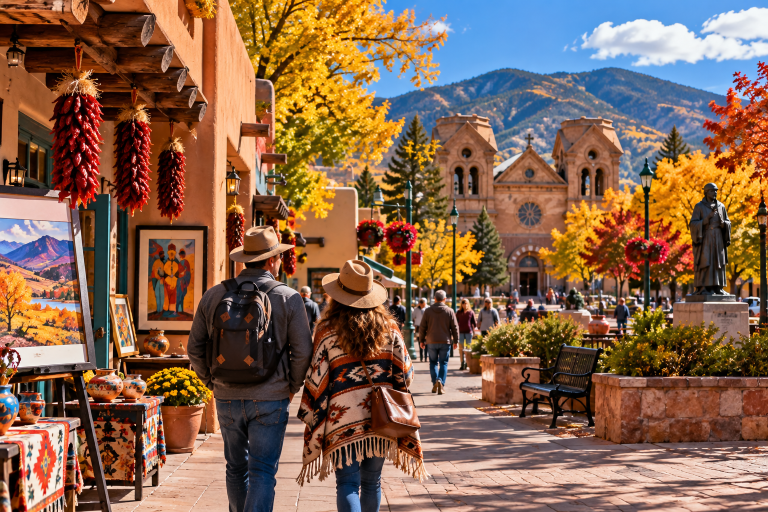
It’s also a symbol. NMSU says the ristra is a symbol of welcome and hospitality, which is why you’ll see one hanging by a front door. Traditionally they’re hung from porches and from the rounded beams called vigas that stick out of adobe buildings.
Red vs. Green: Same Plant, Different Moment
This is the question every visitor asks. New Mexico’s state question is “Red or green?”, which is how restaurants ask which chile sauce you want. The answer is simpler than people expect: they’re the same pepper at different stages. According to NMSU’s publication on making ristras and chile sauce, from mid-September until frost, green chile matures and turns deep red. Red is the ripe version of green.
| Green chile | Red chile | |
|---|---|---|
| What it is | The pod picked before it ripens | The same pod, left to mature and turn red |
| Typical use | Roasted fresh; stews, burgers, sauces | Dried whole on ristras, or ground into powder and sauce |
| Season | Picked from about late July into October | Matures from mid-September until frost |
| Good for a ristra? | No | Yes |
That last row matters. NMSU says green chile isn’t acceptable for making ristras, because it hasn’t reached maturity, and will only shrivel and turn a dull orange as it dries. The variety matters too. NMSU notes that many modern New Mexican chile varieties have been bred for thick fruit walls, which is ideal for green chile but means the pods don’t dry readily on a ristra and may deteriorate instead.
On flavor, Wikipedia’s summary of New Mexico chile describes green as lightly pungent with an onion-like, garlicky, smoky taste. Heat can shift as the chile ripens. The Big Jim variety is described as mild when green and spicier as it ripens to red, though that’s one variety, not a rule for all of them.
Why October Is Ristra Season
Timing follows the plant. Green chile is harvested first, and the red comes later, when the pods are left to ripen. A local seller, Farmers Chile Market, says fresh ristras start to appear around the beginning of September, with most tied in September and October, and fewer customers in November once green chile season ends. Hatch chile season, as one seller puts it, runs from late July through early October. That’s why the supply is shrinking right now.
Where to Buy a Ristra Around Albuquerque
You have a few kinds of places to look, and I haven’t verified current stock or hours for any of them.
If you’re an out-of-towner, the question to ask any seller is the same: where were the chiles grown? New Mexico has a 2012 law that says chile sold in the state as “New Mexican” must be grown in New Mexico or carry a prominent disclaimer, according to Wikipedia, which is worth knowing if authenticity matters to you.
Decorative or Edible? Ask Before You Buy
How to Hang a Ristra
Hanging one is simple, and it’s mostly about where. NMSU’s instructions say to hang a ristra from a sturdy spot such as a rafter or hook. New Mexico Magazine advises a sunny spot with good air flow, so the chiles dry fully over several days to a few weeks. Farmers Chile Market adds a practical caution: hang it somewhere that isn’t too windy, so the chile doesn’t get damaged.
Hanging One From an RV
If you’re traveling, a full-size ristra can be awkward, and a smaller one may suit you better. NMSU’s guide includes instructions for a twelve-inch mini ristra alongside the two-foot version, which is a more manageable size for a camper. A few sensible rules apply, though these are my suggestions, not NMSU’s. Hang it where air can move around it, away from a stove or heater, and don’t hang a fresh ristra in a damp, enclosed space where it can’t dry. Secure it before you drive, since a swinging string can knock into things.
Cooking With the Pods
One reason people buy a ristra is to use it. NMSU’s publication includes a red chile sauce recipe made from dried red pods, and says you can use pods from ristras, as long as they haven’t been treated. A seller’s FAQ says a red chile sauce takes less than an hour to make, and that it can last a year or more in the freezer, which is a seller’s claim, so treat it as a rule of thumb. If you’re curious but cautious, start with the NMSU recipe.
Making Your Own
If you’d rather build one, New Mexico Magazine’s guide is worth reading. It says a two-foot ristra needs about five feet of twine, folded in half and knotted, hung from a nail or hook, with the chiles added in evenly spaced bunches. It also describes the “hat,” the little puff at the top, and suggests soaking the materials while you work. NMSU’s version uses frayed cornhusks at the top for effect.
More Fall Food Traditions Around Albuquerque
Ristras are one part of a fall that smells like roasting chile. If you’re here for more than a weekend, our guide to the Green Chile Cheeseburger Trail covers the state’s most famous way to eat the green. For a different kind of harvest outing, there’s apple picking near Albuquerque, and our Explore the area guide covers the rest of the region.
Para quienes prefieren leer en español, nuestra página del Parque de casas rodantes en Albuquerque tiene información sobre el parque y la zona.
Buy from someone who can tell you where the chile was grown and whether it’s treated, and buy a size you can actually hang. A small, untreated ristra you’ll use beats a big lacquered one you’ll worry about.
A Simple Chile Day
Start the morning at a roaster or seasonal stand, and pick up a ristra and some chile. Have a late breakfast with red or green, which is the classic New Mexico order. In the afternoon, take the apples or the farm stop, then hang your ristra before dark so it’s drying while you cook dinner. Call ahead for hours, since fall schedules shift as the season ends.
What it is: red chile pods strung and dried; a winter pantry and a symbol of welcome (NMSU).
Red vs. green: same pepper; green is unripe, red is mature; red matures from mid-September until frost.
Season: most ristras tied in September and October; fewer by November.
Buy: ask if it’s untreated and where it was grown; treated or lacquered ristras are for decoration only.
Hang: sturdy hook or rafter; sunny, airy, not too windy; days to weeks to dry.
Not verified: current stock and hours at any seller.
For a base while you explore New Mexico’s fall harvest, ABQ RV Park is where to start.
Frequently Asked Questions
What is the difference between red and green chile?
They’re the same pepper at different stages. Green chile is picked before it ripens, and red chile is the mature pod. According to NMSU, from mid-September until frost, green chile matures and turns deep red.
Can I make a ristra from green chile?
No. NMSU says green chile isn’t acceptable for ristras because it hasn’t matured and will shrivel and turn dull orange as it dries. You need mature red pods.
Are ristras edible?
Some are. NMSU says pods sprayed with plastic, shellac or insecticide are not edible and are for decoration only, and New Mexico Magazine says lacquered ristras shouldn’t be eaten. One local seller says its ristras are untreated and edible. Ask before you buy.
How do I hang a chile ristra?
Hang it from a sturdy rafter or hook in a sunny spot with good air flow, and not somewhere too windy. A fresh ristra can take several days to a few weeks to dry fully.
Where can I buy a ristra in Albuquerque?
Options include chile roasters and seasonal shops. Farmers Chile Market on Eubank Blvd NE sells ristras during the chile season, and New Mexico Magazine mentions Sichler Farms’ seasonal Albuquerque shops. I haven’t verified current stock, so call first.
When is ristra season?
Red chile matures from mid-September until frost, and sellers say most ristras are tied in September and October. By November, supply drops as green chile season ends.