
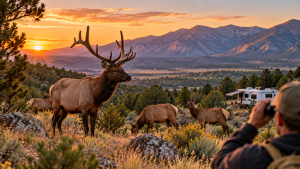
The Manzanos don’t get nearly the attention the Sandias do, and honestly, that’s part of what makes them worth the drive — fewer people on the trail, and a genuinely solid shot at spotting elk if you time it right. August specifically is a good month to try, though not for the reason a lot of people assume.
Why August Specifically, and Why Not for the Reason You’d Think
A lot of people assume August is elk-watching season because they’ve heard about the fall rut and just haven’t clocked the exact timing. The rut itself, when bulls get vocal and territorial, doesn’t really ramp up until September into October. August is genuinely the calmer, quieter stretch before all that starts, which actually works in your favor if what you want is a good look at elk going about ordinary daily life rather than trying to catch dramatic rutting behavior specifically.
What August does have going for it: long daylight hours, warm days that push elk toward shaded, higher-elevation terrain during the heat, and predictable dawn and dusk feeding patterns that are easier to plan around than trying to guess at rut timing weeks in advance.
“People show up expecting bugling and big dramatic displays in August and end up disappointed because that’s just not the right month for it. But if you go in knowing you’re watching normal elk behavior — feeding, moving between bedding areas, that kind of thing — August turns out to be a genuinely calm, rewarding time to be out there early in the morning.”
Why Dawn and Dusk Specifically
Elk are crepuscular, meaning their activity peaks around dawn and dusk rather than in the middle of the day, and this pattern holds especially true during warmer months when midday heat pushes them to bed down in shaded cover. This is standard, well-documented deer and elk family behavior, and it’s exactly why a serious wildlife-watching plan for the Manzanos in August should be built around the first hour or two after sunrise and the last hour or two before sunset, rather than a casual midday hike.
What to Look For Along the Trail
Fresh tracks in soft dirt or mud near any water source, browsed vegetation (bushes and small trees stripped of leaves at a consistent height), and elk scat are all signs worth watching for even if you don’t spot the animals themselves during a given outing. Trails that follow drainages or pass near seasonal water sources tend to be more productive than ridge-top routes, since elk, like most wildlife, orient their daily movement around water access during dry summer stretches.
Other Wildlife Worth Watching For
Elk aren’t the only animal the Forest Service documents in the Manzano wilderness — mule deer are considerably more commonly spotted than elk on any given outing, black bear sightings do happen though less frequently, and pronghorn occasionally show up in the more open grassland transition areas at lower elevation. Wild turkey are also genuinely common and often easier to spot than elk, since they tend to move in visible, vocal groups rather than staying as cautious and hidden.
For a broader sense of what else shares this landscape beyond the Manzanos specifically, the desert wildlife to watch for around Albuquerque RV Park guide covers the wider range of animals worth knowing about across the broader region.
Practical Tips for a Dawn or Dusk Outing
Get There Before the Light Does
Arriving at your chosen trailhead while it’s still mostly dark, so you’re actually out and settled before the first real light hits, matters more than people expect. Elk that are still moving and feeding at first light will often already be bedding down by the time a typical “early morning” hiker arrives an hour or two after sunrise.
Move Slowly and Stay Downwind
Elk have a genuinely strong sense of smell, and moving quietly while being mindful of wind direction relative to where you’re heading meaningfully improves your odds of actually getting close enough to observe rather than just hearing something crash through brush ahead of you. Binoculars matter more than a fast pace here — covering less ground slowly and attentively beats covering more ground quickly and missing everything.
Bring Layers
Manzano elevations range from about 6,100 feet up to Manzano Peak’s 10,098 feet, and pre-dawn temperatures at higher elevations can be genuinely cold even during an August heat wave down in Albuquerque. A layer you can shed as the sun comes up is worth the extra pack weight.
Combining a Manzano Outing With the Rest of Your East Mountains Stay
An early wildlife-watching outing pairs naturally with the broader East Mountains lifestyle that draws a lot of Albuquerque-area visitors up to this elevation in the first place. The East Mountains summer escape guide covers why this whole region is worth building a longer stay around, with an early elk-watching morning fitting naturally into a day that also includes the cooler temperatures and slower pace the East Mountains are known for.
Confirmed wildlife (USDA Forest Service): elk, mule deer, black bear, pronghorn, wild turkey, mountain lion.
August timing: this is before the elk rut (which builds September-October), so expect calm, ordinary daily behavior rather than dramatic rutting displays.
Best times: dawn (first 1-2 hours after sunrise) and dusk (last 1-2 hours before sunset) — elk are crepuscular, most active in these windows.
Signs to watch for: fresh tracks near water, browsed vegetation at a consistent height, scat — even without a direct sighting.
Best terrain: trails following drainages/near seasonal water sources, rather than exposed ridge-top routes.
Technique: arrive before first light, move slowly, stay mindful of wind direction, bring binoculars.
Elevation range: ~6,100 ft to 10,098 ft (Manzano Peak) — pack layers for genuinely cold pre-dawn temps at altitude.
Other wildlife: mule deer and wild turkey more commonly spotted than elk; pronghorn in lower grassland transition areas.
For guests planning an East Mountains stay built around early wildlife-watching mornings, the Albuquerque RV Park photo gallery gives a sense of the property itself. And for booking a stay with easy access to the Manzanos and the broader East Mountains region, Albuquerque RV Park is the starting point.
Frequently Asked Questions
Are there really elk in the Manzano Mountains?
Yes. The U.S. Forest Service specifically documents elk as part of the wildlife found in the Manzano Mountain Wilderness, within the Cibola National Forest’s Mountainair Ranger District, alongside mule deer, black bear, pronghorn, wild turkey, and mountain lion. Elk are a genuine, established part of this ecosystem rather than an occasional or rare sighting.
Is August a good time to see elk in the Manzanos?
August is a good time to see elk going about ordinary daily activity, but it’s before the fall rut, which typically builds through September and into October. If you’re specifically hoping to hear bugling or see dramatic rutting behavior, September and October are the better months. August offers calmer, more predictable dawn and dusk activity patterns, which some wildlife watchers actually prefer for observation.
What time of day are elk most active?
Elk are crepuscular, meaning their activity peaks around dawn and dusk rather than during the middle of the day, and this pattern holds especially true during warmer months when midday heat pushes them into shaded, higher-elevation cover to bed down. The best windows for wildlife watching are generally the first one to two hours after sunrise and the last one to two hours before sunset.
What other wildlife might I see in the Manzano Mountains?
Beyond elk, the U.S. Forest Service documents mule deer, black bear, pronghorn, wild turkey, and mountain lion in the Manzano Mountain Wilderness. Mule deer and wild turkey tend to be considerably more commonly spotted than elk on a typical outing, since they’re generally less cautious and, in the case of turkey, tend to move in visible, vocal groups.
What should I bring for an early morning wildlife-watching hike in the Manzanos?
Binoculars, layers for genuinely cold pre-dawn temperatures at higher elevation even during an August heat wave down in Albuquerque, and enough water for a longer, slower-paced outing are the practical essentials. Arriving at the trailhead while it’s still mostly dark, so you’re settled in before first light, matters more for actually seeing wildlife than arriving after sunrise once elk activity is already winding down.
How can I tell if elk have recently been in an area even if I don’t see them?
Fresh tracks in soft dirt or mud near water sources, vegetation browsed at a consistent height (bushes and small trees stripped of leaves), and scat are all reliable signs of recent elk activity even without a direct sighting. Trails following drainages or passing near seasonal water sources tend to show these signs more often than exposed ridge-top routes, since elk orient much of their daily movement around water access during dry summer stretches.