If you’ve ever driven an RV through unfamiliar terrain… you know the feeling.
Everything’s fine—until suddenly it’s not.
A steep grade sneaks up on you. A tight turn appears faster than expected. And now you’re gripping the wheel a little tighter than you’d like.
Albuquerque is an amazing destination, but getting there? That takes a bit of planning—especially if you want to avoid those “wish I had known” moments.
So let’s break down how to approach RV routes to Albuquerque the smart way—keeping things smooth, safe, and way less stressful.
Why Route Planning Matters More for RV Travel
Driving a car and driving an RV are two completely different experiences.
With an RV, You’re Managing:
- Weight
- Length
- Limited maneuverability
So things like steep grades and sharp turns aren’t just inconvenient—they can actually be risky if you’re not prepared.
That’s why Albuquerque route planning isn’t something to skip.
Understanding Albuquerque’s Terrain
Before you even pick a route, it helps to know what you’re dealing with.
Albuquerque Sits At:
- About 5,000 feet elevation
- Near mountain ranges
- Surrounded by varying terrain
That means depending on your direction, you may encounter hills, elevation changes, and tighter roads.
Best General Approach: Stick to Major Highways
This is your safest bet most of the time.
Why Major Highways Work Best:
- Wider lanes
- Gradual grades
- Better maintenance
When in doubt, stick with interstates or major U.S. routes for the most safest RV roads Albuquerque travelers rely on.
Routes That Tend to Be More RV-Friendly
Let’s keep this practical.
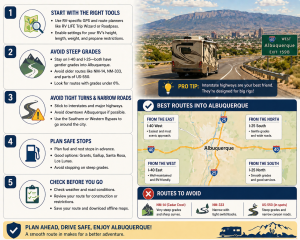
From the East (Texas Direction)
- I-40 is your best option
- Smooth, direct, and RV-friendly
From the South
- I-25 offers a manageable route
- Watch for mild elevation changes
From the West
- I-40 again tends to be the easiest
From the North
- I-25 is common, but be aware of elevation shifts
These routes are commonly used for RV navigation New Mexico because they minimize surprises.
Roads You May Want to Avoid (If Possible)
Not all roads are RV-friendly.
Be Cautious With:
- Scenic byways
- Mountain passes
- Narrow rural roads
They might look nice on a map… but they can include steep climbs and tight turns.
That’s where avoiding steep roads RV strategies come into play.
How to Spot Steep Grades Before You Drive Them
This is a skill worth developing.
Use Tools Like:
- RV-specific GPS apps
- Topographic maps
- Elevation profiles
Look for sudden elevation changes—that’s usually your warning sign.
Understanding Grade Percentages (Without Overthinking It)
You don’t need to be an expert here.
Quick Guide:
- 3–5% grade = manageable
- 6–7% = noticeable
- 8%+ = challenging for larger RVs
If you see anything above 7–8%, take it seriously.
Handling Steep Grades If You Can’t Avoid Them
Sometimes… you don’t have a choice.
Basic Mountain Driving RV Tips:
- Slow down early
- Use lower gears
- Avoid riding your brakes
Take your time. There’s no rush.
Tight Turns: Why They Matter More Than You Think
Turns aren’t just about steering.
With an RV, You Need:
- More space
- Wider turning radius
- Better visibility
Tight turns—especially downhill—can be tricky.
How to Prepare for Tight Turns
A little awareness helps a lot.
Before You Turn:
- Reduce speed
- Check mirrors
- Give yourself extra room
Planning ahead reduces stress in the moment.
Timing Your Drive Matters Too
This one’s underrated.
Try To:
- Avoid rush hours
- Drive during daylight
- Skip bad weather when possible
Good visibility makes everything easier.
Using RV-Specific Navigation Tools
Regular GPS apps don’t always cut it.
Look For Tools That:
- Account for RV height and weight
- Highlight steep grades
- Suggest RV-friendly routes
These tools are a big help for RV navigation New Mexico.
Fuel Stops and Rest Areas
Don’t overlook this part.
Plan Stops That:
- Have enough space for RVs
- Are easy to enter and exit
This reduces stress and keeps your trip flowing.
Arriving in Albuquerque: Final Approach Tips
The last stretch matters.
As You Get Close:
- Stay on main roads
- Avoid cutting through neighborhoods
- Follow RV-friendly directions
Arriving at a place like Albuquerque RV Park is much easier when you stick to well-planned routes.
Setting Yourself Up for a Smooth Stay
Once you arrive, everything should feel easier.
Planning ahead with resources like long-term RV stay options helps you settle in without needing to rush back out.
Common Mistakes RV Travelers Make
Let’s keep it real.
Relying Only on Google Maps
It doesn’t always account for RV limitations.
Choosing Scenic Routes Without Research
They’re not always RV-friendly.
Ignoring Elevation Changes
That’s where most surprises come from.
Driving Too Fast
Slower is safer—especially on unfamiliar roads.
A Simple Route Planning Strategy
You don’t need anything complicated.
Just Follow This:
- Stick to major highways
- Check elevation changes
- Use RV-friendly navigation tools
- Plan your stops
That’s enough to avoid most issues.
FAQs: RV Routes to Albuquerque
What’s the safest route into Albuquerque for RVs?
Interstates like I-40 and I-25 are generally the safest options.
Are there steep roads near Albuquerque?
Yes, depending on your route—especially in mountainous areas.
Should I avoid scenic routes?
Not always, but research them first before taking an RV.
How do I find RV-friendly roads?
Use RV-specific GPS tools and check elevation maps.
What’s the biggest mistake RV drivers make?
Relying on standard GPS without considering RV size and weight.
Is mountain driving dangerous in an RV?
It can be if you’re unprepared—but manageable with the right approach.
Final Thoughts
Driving into Albuquerque in an RV doesn’t have to be stressful.
Most of the time, it comes down to planning ahead and making simple choices—like sticking to safer roads and knowing what to expect.
You don’t need to overthink it.
Just stay aware, take your time, and trust your preparation.
Because once you get there… it’s all worth it.