
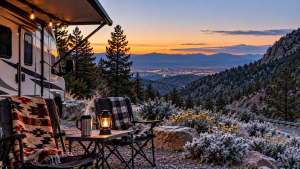
Albuquerque’s average first frost lands around October 17, and it’s tempting to assume Tijeras follows the same calendar just because it’s only a twenty-minute drive away. It doesn’t. The elevation difference between the two is real and significant enough that freeze risk genuinely arrives earlier up here, and knowing the actual numbers behind that gap changes how you should plan for it.
Why 1,070 Feet Actually Matters
Air temperature drops with elevation at a fairly predictable rate, commonly cited as roughly 3.5°F for every 1,000 feet of elevation gain under typical atmospheric conditions. Applied to the real gap between Tijeras and Albuquerque, that works out to Tijeras running something like 3 to 4°F cooler than Albuquerque on a comparable night, all else being equal. That’s not a dramatic swing on any single evening, but stacked across the transition from summer into fall, it’s exactly the kind of consistent gap that shifts when the actual first freeze shows up.
Albuquerque’s Actual Frost Timeline
According to frost date data drawn from NOAA’s National Centers for Environmental Information, Albuquerque’s frost risk genuinely begins around October 21, reaching a 50 percent chance of a 32-degree night by around November 3, and an 80 percent chance by November 13. Albuquerque’s commonly cited average first frost date lands around October 17. Given Tijeras’s consistently cooler nighttime temperatures at that additional elevation, treating the city’s own frost timeline as your own planning benchmark, rather than a genuinely earlier date specific to your actual elevation, is exactly the kind of assumption that catches people off guard.
“People move up here from the city and keep checking the Albuquerque forecast like it’s going to tell them what’s happening at their own site. It might be a comfortable 55 degrees down in the valley and already dropping into the 40s up here the same night. That gap is real, and once folks actually notice it, they start planning around their own conditions instead of the city’s.”
What Tijeras Winters Actually Look Like
Winter nighttime temperatures in Tijeras commonly dip below freezing while daytime highs generally stay in the high-40s to low-50s range, according to regional climate data for the area. This pattern, genuinely colder nights against comparatively mild days, is a hallmark of high-desert mountain climates specifically, and it’s precisely why nighttime freeze risk deserves more attention here than a simple daytime high temperature would suggest.
What This Means for Your RV Specifically
Water Lines Are the First Real Vulnerability
Exposed water lines, hoses, and connections are typically the first thing to suffer once temperatures drop below freezing, and given Tijeras’s earlier and more frequent freeze risk relative to the city, starting your cold-weather water precautions earlier than a general “New Mexico fall” timeline would suggest is a genuinely sensible adjustment. Disconnecting and draining exterior hoses ahead of any forecasted overnight freeze, rather than leaving them connected by default through September and into October, is a simple habit worth adopting earlier here than you might elsewhere in the metro area.
Don’t Wait for a City-Wide Freeze Warning
Official freeze warnings and advisories from the National Weather Service are generally issued based on broader regional conditions, which may not fully capture a specific higher-elevation microclimate like Tijeras. Checking overnight low forecasts specifically for your own elevation, rather than relying solely on a general Albuquerque-area advisory, gives you a more accurate, earlier warning of when your own site is actually at risk.
Building a Realistic Fall Prep Timeline
Given the real elevation-driven gap in freeze timing, starting fall RV preparation, checking seals, testing your furnace, and reviewing your water system, somewhat earlier than a general regional guide would suggest is a reasonable, informed adjustment specific to living or staying at this elevation. The fall maintenance checklist for your RV in the high desert covers the broader seasonal prep steps worth working through, adjusted with this earlier timeline specifically in mind for a Tijeras-area stay.
Planning a Longer Stay With This in Mind
For guests considering a longer or full-time stay in the East Mountains specifically, understanding this genuine seasonal timing difference from the city is worth factoring into your broader planning. The New Mexico RV travel and planning guide covers the wider regional picture, and the what it’s like to live at Albuquerque RV Park guide covers day-to-day life at this elevation specifically, including how residents actually adapt to this earlier seasonal shift.
Real elevation gap: Tijeras 6,382 ft vs. Albuquerque 5,312 ft — a genuine 1,070-foot difference.
Temperature effect: standard lapse rate (~3.5°F per 1,000 ft) means Tijeras runs roughly 3-4°F cooler than Albuquerque on a comparable night.
Albuquerque’s frost timeline: risk begins ~Oct 21, average first frost ~Oct 17, 50% chance of 32°F by ~Nov 3, 80% chance by Nov 13 (NOAA data).
Why this matters for Tijeras: given the consistent elevation-driven temperature gap, actual freeze risk here arrives earlier than these city-based dates suggest.
Winter pattern: nights commonly dip below freezing while days stay in the high-40s/low-50s — genuinely colder nights against mild days.
Practical steps: start water-line freeze prep earlier than a general regional timeline suggests; check overnight lows for your own elevation rather than relying solely on a citywide advisory.
For guests planning a stay at this elevation with the season’s real timing in mind, Albuquerque RV Park is the starting point for booking.
Frequently Asked Questions
Is it actually colder in Tijeras than in Albuquerque?
Yes, genuinely. Tijeras sits at 6,382 feet elevation compared to Albuquerque’s 5,312 feet, a difference of 1,070 feet. Using the standard atmospheric lapse rate of roughly 3.5°F per 1,000 feet of elevation, this translates to Tijeras typically running about 3 to 4°F cooler than Albuquerque on a comparable night, which is enough of a consistent gap to shift when actual freeze risk begins each fall.
When does Albuquerque typically see its first frost?
According to frost date data drawn from NOAA’s National Centers for Environmental Information, Albuquerque’s frost risk genuinely begins around October 21, with the average first frost commonly cited around October 17, reaching a 50 percent chance of a 32-degree night by around November 3.
Should I start winterizing my RV earlier if I’m staying in the Tijeras area?
Yes, this is a reasonable adjustment. Given Tijeras’s genuinely earlier freeze risk relative to the city due to its higher elevation, starting cold-weather precautions like water line protection somewhat earlier than a general New Mexico fall timeline would suggest is a sensible, informed adaptation specific to this elevation.
Can I rely on Albuquerque’s weather forecast for my Tijeras site?
Not entirely. Official forecasts and freeze advisories often reflect broader regional conditions that may not fully capture a specific higher-elevation microclimate like Tijeras. Checking overnight low forecasts specifically for your own elevation, rather than relying solely on a general Albuquerque-area advisory, gives a more accurate picture of when your own site is actually at risk.
What is the first thing that freezes on an RV when temperatures drop?
Exposed water lines, hoses, and connections are typically the first vulnerability once temperatures drop below freezing. Disconnecting and draining exterior hoses ahead of any forecasted overnight freeze, rather than leaving them connected by default, is a simple habit that prevents a frozen or burst line during an early-season cold snap.
What does winter actually look like in Tijeras?
Winter nighttime temperatures in Tijeras commonly dip below freezing, while daytime highs generally stay in the high-40s to low-50s range. This pattern of genuinely cold nights alongside comparatively mild days is characteristic of high-desert mountain climates and is exactly why nighttime freeze risk deserves close attention here, even when daytime conditions still feel mild.