
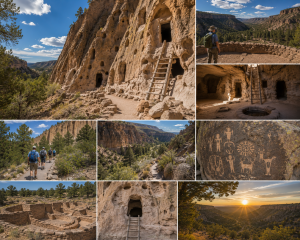
About 50 miles north of Albuquerque, tucked into the canyon country of the Pajarito Plateau, there’s a place that asks you to slow down and pay attention. Bandelier is that kind of place — the kind where the history isn’t behind glass.
The Bandelier National Monument day trip from Albuquerque is one of the most rewarding excursions the region offers, and it’s consistently underestimated by people who haven’t made it yet. A place this significant — continuously inhabited for centuries, with archaeological features you can actually touch and climb into — rarely gets the attention it deserves compared to the more heavily marketed New Mexico destinations.
This guide covers everything you need to make the most of it: the history, the trails, the practical logistics, and why it belongs at the top of any day trips from Albuquerque list.
What Is Bandelier National Monument?
Bandelier encompasses about 33,000 acres on the Pajarito Plateau in northern New Mexico, most of it backcountry wilderness. The main visitor area sits in Frijoles Canyon — a box canyon cut by a small stream through the volcanic tuff landscape of the Jemez Mountains — and it’s here that the most accessible and most historically significant archaeological features are concentrated.
The canyon was occupied by ancestral Pueblo peoples from roughly 1150 CE through the late 1500s CE. At its height, the community in Frijoles Canyon housed an estimated 1,000 to 2,000 people in a combination of masonry pueblos built on the canyon floor and cavate rooms carved directly into the soft volcanic tuff cliffs. The soft stone was easily worked — hands and basic tools were enough to shape rooms into the cliff face — and the combination of ground-level and cliff-dwelling structures represents a settlement pattern that is specific to this region of the Southwest.
The monument is named for Adolph Bandelier, a Swiss-American anthropologist who visited the site in 1880 and documented it extensively, helping bring it to scientific and public attention. The official national monument designation came in 1916.
“Bandelier doesn’t interpret the past for you. It puts you in front of it and lets you work out what it means. That’s a rarer thing than most history sites are willing to do.”
The Main Loop Trail: Where to Start
For most Bandelier ruins visitors, the Main Loop Trail is the centerpiece of the day. It’s about 1.4 miles round trip from the visitor center, essentially flat along the canyon floor, and passes the major archaeological features of the canyon.
Tyuonyi Pueblo
The first significant feature on the main loop is Tyuonyi (pronounced roughly choo-OHN-yee) — the main pueblo structure that once stood up to three stories tall at the center of the canyon floor. Today the circular outline of the foundation walls is visible, enclosing a central plaza. At its peak, Tyuonyi had as many as 400 rooms. Walking around it and through the exposed foundation, the scale of the community becomes real in a way that photographs don’t convey. You’re standing inside a building that was home to hundreds of people and has been a ruin for four hundred years. There’s nothing else like that feeling in a museum.
The Cavates
The cavate rooms carved into the canyon wall are the signature feature of Bandelier and the images most people recognize. The volcanic tuff here is soft enough that it could be carved with stone tools, and the ancestral Pueblo people cut sleeping rooms, storage spaces, and entire dwelling rooms directly into the cliff. The rock face runs with these excavations for hundreds of yards along the canyon wall, some accessible via wooden ladders that allow modern visitors to climb up and peer inside — or in some cases climb in entirely.
The plaster that the inhabitants applied to the interior walls is still visible in many cavates. In some, soot from cooking fires marks the ceiling. Handprints appear where the plaster was applied by hand centuries ago. You’re in direct contact with the physical evidence of daily life from 600 years ago, and that contact happens without glass or rope barriers. This is what makes Bandelier different from a conventional museum or heritage site.
Alcove House: The More Adventurous Option
Continuing past the main cavate section on a short spur trail leads to Alcove House — formerly called Ceremonial Cave — a kiva (circular ceremonial chamber) set into a natural alcove about 140 feet above the canyon floor. Getting there requires climbing four wooden ladders and navigating some steep rock steps. It is absolutely worth it.
The alcove itself is large enough to shelter a small gathering, the kiva inside is well-preserved, and the view from the alcove down the canyon is extraordinary. The ladder climb is strenuous but not technical — most reasonably fit adults manage it without difficulty. If you’re visiting with younger children or anyone with mobility limitations, assess the ladder sections honestly before committing. The main loop is fully accessible; Alcove House is not.
The Backcountry: For Those Who Want More
Bandelier’s 33,000 acres include a backcountry wilderness that most visitors never see. The Tsankawi section — a separate, unconnected unit of the monument about 12 miles from the main canyon — has a self-guided loop trail through another ancestral Pueblo settlement on a mesa top, with features that are similar to Frijoles Canyon but with essentially no other visitors on most weekdays. It’s worth a separate visit if your schedule allows.
Within the main canyon area, longer trails extend into the backcountry for hikers interested in exploring the wider plateau landscape. The Falls Trail continues up Frijoles Creek to a series of waterfalls — seasonal in their flow, but striking when active — and the Frey Trail climbs out of the canyon to the mesa rim with views across the Pajarito Plateau and toward the Jemez Mountains.
Practical Information for the Day Trip
The drive from Albuquerque to Bandelier runs about 90 minutes under normal conditions. The route takes you north on I-25 to US-550 or NM-502 through White Rock and Los Alamos, then down into Frijoles Canyon. The descent into the canyon on the final stretch of the approach road is scenic and gives you a preview of the terrain you’re about to walk through.
Timed Entry Permits
This is important. During peak season — roughly late May through mid-October — Bandelier operates a timed entry system from 9 a.m. to 3 p.m. Visitors arriving by private vehicle during this window must have a timed entry permit, which is reservable in advance through recreation.gov. Walk-ins and vehicles arriving before 9 a.m. or after 3 p.m. do not need permits. Alternatively, visitors can park at the White Rock Visitor Center and take the free shuttle bus into the canyon — no permit required for shuttle riders.
If you’re planning a visit during peak season, checking the permit availability on recreation.gov well in advance is essential. Popular summer weekends sell out quickly. Spring shoulder season (April through mid-May) and fall (mid-October through November) often don’t require permits and have significantly better weather and lower crowds.
What to Bring
Water — more than you think you need. The canyon sits at roughly 6,600 feet elevation and the New Mexico sun is intense even in spring. The walk is relatively short but the altitude and UV exposure make hydration important. Sunscreen and a hat are standard. Wear closed-toe shoes with some grip — the trail surfaces are uneven in places and the ladder sections require comfortable footwear. If you plan to climb into the cavates or attempt Alcove House, shoes with rubber soles are important.
Snacks and lunch matter because there’s nowhere to buy food in the canyon. The Bandelier visitor center has a small gift shop but no restaurant. Pack a proper lunch and plan to eat it at one of the picnic areas along the creek — it’s a genuinely pleasant place to sit and eat.
Leave by 7:30 a.m. to arrive before the 9 a.m. timed entry window (no permit needed for early arrivals). Walk the main loop and cavates: about 2 hours at a moderate pace. Alcove House ladder climb if desired: add 45 minutes. Picnic lunch at the creek: 30-45 minutes. Drive back via White Rock and the Rio Grande Gorge overlook on NM-68 for a different return route: adds an hour but is worth it. Home by 4 to 5 p.m. The whole day is full without being rushed.
Why This Belongs on Your New Mexico List
Bandelier is one of those national monuments near Albuquerque that offers something most heritage sites can’t — direct, tactile contact with the past. You can run your hand along the plaster the ancestors of today’s Pueblo people applied to a cavate wall. You can sit in a kiva that has held human gatherings for six centuries. You can look across a canyon and understand, at a human scale, how a community lived in this landscape.
That kind of encounter doesn’t happen in many places. It’s one of the things that makes New Mexico history sites uniquely compelling compared to heritage sites in other parts of the country — the sheer depth of time represented, and the accessibility of physical evidence that time has left behind.
For travelers based in the Albuquerque area who want to understand the full range of what the region offers for day trips like this one, the Albuquerque area exploration guide is a practical resource that goes well beyond the obvious tourist circuit. Bandelier is on that guide for good reason — but it’s one of many.
And for visitors who are thinking about what extended time in the Albuquerque region actually involves — the community, the lifestyle, the sense of what it means to be based somewhere rather than passing through — the content on what life in Albuquerque is really like gives a grounded picture that travel guides don’t usually provide. Albuquerque RV Park is a natural home base for exactly the kind of exploratory, historically engaged travel that a Bandelier day trip represents.
Frequently Asked Questions
How far is Bandelier National Monument from Albuquerque?
Bandelier National Monument is approximately 50 to 55 miles from Albuquerque, depending on the specific route taken. The most common route follows I-25 north to the NM-502 junction, then west through White Rock and Los Alamos before descending into Frijoles Canyon. Drive time is approximately 90 minutes without stops. The White Rock route through the Pajarito Plateau is scenic and adds minimal time compared to the slightly faster but less interesting interstate alternative.
Do I need a timed entry permit to visit Bandelier?
During peak season (approximately late May through mid-October), timed entry permits are required for private vehicles arriving between 9 a.m. and 3 p.m. These are available through recreation.gov and should be reserved in advance — popular summer weekends sell out quickly. Vehicles arriving before 9 a.m. or after 3 p.m. do not need permits. Visitors who park at the White Rock Visitor Center and take the free shuttle bus also do not need timed entry permits. Outside of peak season, permits are typically not required — confirm current requirements on the National Park Service website before your visit.
Is Bandelier accessible for children and older visitors?
The main loop trail is largely flat and accessible for most ages and mobility levels — it follows the canyon floor along a well-maintained path with minimal elevation change. The cavate sections involve some steps and uneven surfaces but are generally manageable. Alcove House, with its four wooden ladder sections climbing 140 feet above the canyon floor, is not suitable for young children, visitors with mobility limitations, or those uncomfortable with heights or steep climbs. The main loop without Alcove House provides the full archaeological experience of the canyon and is entirely worthwhile for visitors of all ages and abilities.
What is the best time of year to visit Bandelier?
Late spring (April through mid-May) and fall (mid-October through November) are the best overall windows. These shoulder seasons offer comfortable temperatures, no timed entry permit requirements, lower visitor numbers, and excellent light for photography. Summer is the busiest season — monsoon afternoon thunderstorms are common from mid-July through September, which can make afternoon visits unpredictable. Winter visits are possible and often beautiful with snow in the canyon, though some facilities may have reduced hours. Morning visits in any season are preferable to afternoon visits for comfort and crowd management.
Can you climb into the cave dwellings at Bandelier?
Yes. Several of the cavate rooms along the main loop trail are accessible by short wooden ladders and allow visitors to actually enter the carved spaces. This is one of the more remarkable aspects of the Bandelier experience — direct, physical access to ancient dwelling spaces without barriers. The interiors often retain plaster, soot marks from ancient fires, and other evidence of habitation. Visitors are asked to treat the spaces respectfully and not damage or remove any material. The park provides the ladders and maintains the access — the experience of climbing into a room carved by hand six hundred years ago is worth every moment of the approach.
Is there food available at Bandelier National Monument?
No. The Bandelier visitor center has a bookstore and gift shop but no restaurant or food service. There are no concessions in the canyon. Packing a complete lunch and snacks is essential — the picnic areas along Frijoles Creek are pleasant and well-situated for a mid-day break. The nearest food options are in White Rock (about 15 minutes away) or Los Alamos (about 20 minutes away). Planning your food supply before entering the canyon is standard practice and makes the day significantly more comfortable, particularly for families with children who may not manage the afternoon drive back to Albuquerque on an empty stomach.