Albuquerque has two very different ways to experience Día de los Muertos: a grassroots South Valley procession that’s been running for decades, and a ten-day Old Town celebration built around thousands of marigolds. This year they overlap on the same weekend, which makes the planning worth getting right.
If you’re staying out in the East Mountains, you’re a short drive down I-40 from both. That’s one of the quiet advantages of this location: you get cooler, quieter evenings out here, and a full cultural calendar a short drive away when you want it.
How Albuquerque Does Día de los Muertos
One thing worth knowing before you go is that the holiday has a shorter history in New Mexico than people often assume. According to the New Mexico Humanities Council, both Halloween and Día de los Muertos are relatively new to the state in the grand scheme of its history, Día de los Muertos more so than Halloween, and neither was a traditional celebration during colonial times. Both have since been widely embraced. The Council also points out that Muertos ceremonies manifest differently in each region or town, much like feast days here are unique to a particular Pueblo or Hispano village.
The older strand is the European Feast of All Souls, which often included a special Mass, visits to cemeteries, candles, and flowers on graves. That helps explain why a New Mexico celebration can feel both Mexican and local. What you’ll see in Albuquerque is a modern, community-driven version, and the best examples are in the South Valley and Old Town.
Muertos y Marigolds: The South Valley Procession
The headline event for most locals is the Muertos y Marigolds parade. According to the organizers’ own site, the 2026 South Valley Día de los Muertos Celebration and Marigold Procession is on Sunday, November 1, at the Westside Community Center, 1250 Isleta Blvd SW. The parade is listed for 12 p.m. and the celebration runs from 12 to 4 p.m. This is the 34th annual event, and the group also runs community art workshops every Saturday leading up to it.
The Santa Fe New Mexican has called it perhaps the best-known Día de los Muertos celebration in Northern New Mexico. It’s also deliberately grassroots. The organizers describe their mission as cultural self-determination, strengthening community, intergenerational learning through art, music, food, dance and political satire, and pride in South Valley cultural identity. The Posada connection is part of that: the event draws on José Guadalupe Posada’s portrayals of personalities and professions as skeletons, which circulated as printed sheets with a healthy dose of satire.
What to expect, based on past coverageAlbuquerque Journal photo coverage from earlier years shows floats, community groups, and giant puppets, including a wedding procession strolling down Isleta Boulevard. Past years also featured an ofrenda exhibit and an art-and-food presence at the Westside Community Center after the parade. I haven’t seen the 2026 lineup, so treat this as a sense of the tone and check the organizers for specifics.
One practical caution: the schedule has moved around between years. Coverage of an earlier edition listed noon to 4 p.m. with the procession at 2 p.m., while this year’s page lists the parade at noon. That’s a good reason to check the official site the week of, rather than trusting last year’s flyer. Past coverage described the event as free, but confirm that for 2026.
Old Town’s Marigold Mile
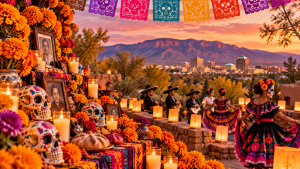
The other major option runs far longer. According to the Visit Albuquerque event listing, Día de los Muertos in Old Town runs from October 30 through November 8, 2026, at the Historic Old Town Plaza, and it’s listed as free. The celebration includes the Marigold Mile, with thousands of marigolds strung through the shops and plazas, hidden patios and courtyards opening to reveal ofrendas, and a candlelight procession to Plaza de los Recuerdos. Old Town’s own site calls this the fourth annual celebration there.
Because it spans ten days, it’s the easy fallback if the parade day doesn’t work for your group. Evenings are the best time, when the marigolds and the candlelight do most of the work.
Other Places Worth Checking
The National Hispanic Cultural Center has hosted free Día de los Muertos family programming in past years. A 2024 event, for example, ran from 11 a.m. to 3 p.m. on November 2 with sugar skull decorating, mini ofrendas, paper flowers, and a community ofrenda alongside ones made by local schools and organizations. I couldn’t confirm 2026 details, so check the center directly at its Barelas campus on Fourth Street SW before planning around it.
Ofrenda Traditions: What You’re Looking At
An ofrenda is an altar built to welcome the dead home, and the pieces all have a purpose. Old Town’s own explanation says altars are filled with favorite foods, photos, flowers, and other offerings to welcome the spirits. Marigolds, particularly their orange and yellow petals, are believed to warm and guide souls, and the scent of marigolds and copal incense is meant to pave a sensory path for the departed. UNESCO named the tradition an Intangible Cultural Heritage of Humanity in 2008.
The details that make each altar personal tend to be small. A photograph, a favorite meal, a cup of coffee, a work tool or a pack of cards. If you walk past an altar and notice something that seems oddly specific, that’s usually the point. It’s someone’s memory made visible.
Planning the Trip From the East Mountains
Getting There and Timing
From Tijeras and the East Mountains, the route in is I-40 down through Tijeras Canyon, and you’ll want to check your route and allow extra time on a parade day, since road closures and parking are the kinds of things that vary by year and I haven’t seen the 2026 plan. Arriving before the 12 p.m. parade start lets you find parking and see the altars first.
Sunday, November 1 is also the day clocks fall back at 2 a.m., so you’ll have an extra hour in the morning. That’s a small bonus for an early start.
Dress for the Elevation
Tijeras sits roughly a thousand feet above Albuquerque, which tends to make mornings noticeably cooler up here than down in the valley. Early November evenings in Old Town, standing for a candlelight procession, can feel colder than you’d expect, so layers matter.
These are my own suggestions, not event rules. Don’t touch or move anything on an altar. Ask before photographing people, especially anyone standing at an altar for a relative. And follow each event’s lead on costumes and face paint rather than showing up in a Halloween look.
A Simple Way to Plan the Weekend
The dates line up well for a three-day trip. Old Town’s celebration opens Friday, October 30, so you can ease in with a Friday-evening walk through the Marigold Mile when the crowds are lighter. Saturday, October 31 is Halloween, which makes Old Town a good evening for the candlelight procession with older kids, though the tone there is more reflective than spooky. Sunday, November 1 is the big day: the South Valley parade at noon, then back to Old Town after dark if you still have the energy. If you want to feel part of the build-up rather than just the finale, the Saturday community art workshops leading up to the parade are another way in, though check the organizers for dates and locations.
Where to Stay
If you’re building a weekend around these events, the explore the area guide covers what else is within reach, and the nightly and weekly pricing page shows current rates. Para quienes buscan un parque de casas rodantes en Albuquerque, esa página cubre el sitio y su ubicación en las montañas del este.
Muertos y Marigolds (South Valley): Sunday, Nov 1; parade 12 p.m., celebration 12-4 p.m.; Westside Community Center, 1250 Isleta Blvd SW; 34th annual; confirm schedule and cost with the organizers.
Old Town Albuquerque: Oct 30-Nov 8; Marigold Mile, hidden ofrendas, candlelight procession to Plaza de los Recuerdos; listed as free.
National Hispanic Cultural Center: free family programming in past years; 2026 details not confirmed.
Local context: both Halloween and Día de los Muertos are relatively new to New Mexico, and neither was a colonial-era tradition (New Mexico Humanities Council).
From the East Mountains: I-40 through Tijeras Canyon; arrive before noon on parade day; dress in layers.
Clocks: fall back at 2 a.m. Sunday, Nov 1.
For a stay timed around these events, Albuquerque RV Park is where to start.
Frequently Asked Questions
When is the Muertos y Marigolds parade in 2026?
The organizers list the 2026 South Valley Día de los Muertos Celebration and Marigold Procession for Sunday, November 1, with the parade at 12 p.m. and the celebration from 12 to 4 p.m. at the Westside Community Center, 1250 Isleta Blvd SW. Because the schedule has shifted between years, confirm on the organizers’ site closer to the date.
What Day of the Dead events are in Albuquerque this year?
The two I could verify are the South Valley parade on November 1 and Old Town’s celebration, which runs October 30 through November 8. The National Hispanic Cultural Center has hosted family programming in past years, but I couldn’t confirm 2026 details.
What is the Marigold Mile in Old Town?
It’s the part of Old Town’s celebration where shops and plazas are decorated with thousands of orange and yellow marigolds strung together. The ten-day event also includes hidden courtyard ofrendas and a candlelight procession to Plaza de los Recuerdos, and it’s listed as free.
Is Día de los Muertos an old New Mexico tradition?
It’s more recent here than many people assume. The New Mexico Humanities Council notes that both Halloween and Día de los Muertos are relatively new to the state’s history, Día de los Muertos more so, and neither was a traditional colonial-era celebration, though both are now widely embraced. The older European All Souls tradition included Mass, cemetery visits, candles, and flowers on graves.
How far is the South Valley parade from the East Mountains?
It’s a drive down I-40 through Tijeras Canyon and across town, and the travel time varies with traffic and parade-day closures, so check your route and leave extra time. Arriving before the parade starts makes parking easier.
What should I wear and bring?
Dress in layers. Tijeras sits roughly a thousand feet above Albuquerque, so mornings out here run cooler than the valley, and a candlelight procession in early November can feel cold. Comfortable shoes help too, since both events involve a lot of walking.