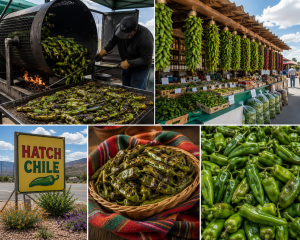
There’s a specific smell that means it’s late summer in New Mexico, and it isn’t the desert heat or the rain on creosote bush. It’s roasted green chile, coming off a rotating drum cage in a grocery store parking lot, filling the whole neighborhood with the smell that New Mexicans wait for all year.
What Makes Hatch Chile Specific
Hatch chile isn’t a variety — it’s a regional designation, similar to how Champagne refers to a specific place rather than a grape varietal. The chile peppers grown in the Hatch Valley along the Rio Grande in southern New Mexico, primarily around the town of Hatch in Doña Ana County, are typically New Mexico varieties (NuMex varieties developed at New Mexico State University) grown in the specific soil, water, and climate conditions of that valley. The combination of mineral-rich Rio Grande river water, the valley’s specific soil composition, and the high-desert growing climate with intense sun and significant day-to-night temperature swings produces a flavor profile that growers and chile enthusiasts insist is distinct from chiles of the same varieties grown elsewhere.
Whether the Hatch-specific flavor distinction is entirely real or partly mythology is a debate that New Mexicans have among themselves and generally don’t resolve, but the cultural weight behind the Hatch name is completely real regardless of where you land on the flavor question. Hatch chile season — roughly early August through late September, with the peak typically in late August — is when the harvest comes in and the roasting begins across the state.
“Whether Hatch chile actually tastes different than the same variety grown forty miles away is the kind of argument New Mexicans have for fun. The roasting ritual itself is not up for debate — that part everyone agrees on.”
The Roasting Ritual
The defining public experience of Hatch season is the chile roaster — a rotating wire-mesh drum, usually propane-fired, set up in grocery store parking lots, farmers markets, and roadside stands throughout Albuquerque and across New Mexico during August and September. You buy a sack of fresh green chiles (typically sold by the bushel or half-bushel, roughly 25 to 30 pounds for a full bushel), and the roaster operator tumbles them over open flame until the skins blister and char.
The smell of roasting chile is, without exaggeration, one of the defining sensory experiences of late summer in New Mexico. It carries for blocks. Longtime Albuquerque residents can identify the difference between mild, medium, and hot roasting batches by smell alone — the capsaicin in the smoke has a noticeably different sharpness as the heat level increases.
Where to Get Your Chile Roasted Around Albuquerque
Most major Albuquerque grocery chains — Albertsons, Smith’s, and several locally owned markets — set up roasters in their parking lots throughout the season, particularly on weekends when demand peaks. Farmers markets, including the Albuquerque Downtown Growers’ Market and the Rail Yards Market, typically have dedicated roasting vendors during peak season. Roadside stands along the major Albuquerque corridors (particularly along Fourth Street and Isleta Boulevard, areas with strong historical agricultural ties) often set up seasonal chile sales with on-site roasting through August and September.
Heat level selection (mild, medium, hot, or extra hot) is chosen before roasting — this isn’t something added afterward, it’s a function of which chile variety and harvest batch you’re buying. If you’re unsure what heat level to choose, asking the vendor for a recommendation based on what you’re planning to do with the chile (a salsa might want more heat than a green chile stew meant for a broader range of palates) is standard practice and vendors expect the question.
What to Do With Your Roasted Chile
Once roasted, the chile needs to be peeled, and this is where the at-home work begins. The traditional approach is to let the roasted chiles cool slightly, then peel the blistered skin off by hand (it should come away easily after roasting) and either use the chile fresh or freeze it for the year ahead.
Freezing for the Year
Most Albuquerque households who go through the seasonal roasting ritual aren’t just making a single meal — they’re stocking the freezer for the next 12 months. Roasted, peeled green chile freezes extremely well in quart-size freezer bags, flattened for efficient storage, and many families process an entire bushel into a year’s supply across a single weekend. The traditional approach is to freeze the chile whole (unchopped) so it can be diced, chopped, or used whole depending on the eventual recipe, rather than committing to a chopped format before you know what you’re making.
What New Mexicans Actually Make With It
Green chile stew — a hearty pork or beef stew built around roasted green chile, potatoes, and a simple broth — is the cold-weather staple that most New Mexico households make through fall and winter from their frozen chile stock. Green chile cheeseburgers (a New Mexico institution that locals will argue is superior to any other regional burger style) require roasted green chile as a non-negotiable topping. Chile rellenos, enchiladas (New Mexico style, typically stacked rather than rolled), and the simple but essential practice of adding green chile to scrambled eggs, mac and cheese, or pretty much anything else round out the typical use cases. The phrase “red or green?” — asking which chile a diner wants on their order — is so embedded in New Mexico culture that it was designated the state’s official question by the legislature in 1996.
Visiting During Chile Season: What to Expect
For visitors and RV travelers in the Albuquerque area during August and September, Hatch chile season is worth building into the trip even if you’re not planning to roast and freeze a bushel for the year. Restaurants across Albuquerque feature seasonal Hatch chile specials during this window — green chile cheeseburger specials, chile relleno features, and seasonal menu items that highlight the fresh harvest in ways that the rest of the year’s chile supply (typically frozen or canned from the previous season) doesn’t quite match.
The New Mexico State Fair, which runs in September, often features chile-related vendors and events that coincide with peak season. The Hatch Chile Festival itself takes place in the town of Hatch (about 215 miles south of Albuquerque, near Las Cruces) over Labor Day weekend — a genuinely worthwhile trip for visitors with the time and interest to see the source, though it’s a separate excursion from an Albuquerque-based stay rather than a day trip.
Season window: early August through late September. Peak: late August.
Where to buy and roast: major grocery store parking lots (Albertsons, Smith’s), Downtown Growers’ Market, Rail Yards Market, Fourth Street roadside stands.
Heat levels: mild, medium, hot, extra hot — chosen before roasting, ask vendor for guidance.
Quantity: sold by bushel (~25-30 lbs) or half-bushel. Most households freeze a year’s supply.
Try it without buying a bushel: order green chile cheeseburgers or stew at local restaurants featuring seasonal specials.
Hatch Chile Festival: town of Hatch, ~215 miles south, Labor Day weekend — separate trip from Albuquerque.
For RV travelers timing a New Mexico trip to coincide with chile season, the RVing and New Mexico travel guide covers the broader seasonal travel picture for the state. The Albuquerque community and extended-stay lifestyle guide gives context on the local food culture and seasonal rhythms that residents and long-term visitors experience throughout the year. Travelers continuing further into New Mexico can check the RV park in New Mexico guide for additional state options. For questions about timing a stay around the chile season or other seasonal Albuquerque events, the Albuquerque RV Park contact page connects you directly. And for planning your stay, Albuquerque RV Park is the starting point.
Frequently Asked Questions
When is Hatch green chile season in New Mexico?
Hatch green chile season runs roughly from early August through late September, with the peak harvest and roasting activity typically occurring in late August. The exact timing varies somewhat year to year based on growing conditions, but the general window is consistent. This is when chile roasters appear in grocery store parking lots and farmers markets throughout Albuquerque and across New Mexico, and when restaurants feature seasonal specials built around the fresh harvest. The season is short and intense by design — it follows the harvest timeline of the actual crop rather than being an extended marketing period.
Where can I get green chile roasted in Albuquerque?
Most major Albuquerque grocery store chains (Albertsons, Smith’s, and several local markets) set up roasting drums in their parking lots throughout chile season, particularly active on weekends. The Albuquerque Downtown Growers’ Market and Rail Yards Market typically have dedicated chile roasting vendors during peak season. Roadside stands along Fourth Street and Isleta Boulevard, areas with historical agricultural significance to the city, often have seasonal chile sales with on-site roasting. Checking local Albuquerque news sources or social media during August for specific roaster locations and schedules is the most current way to find an active roaster on a given weekend, as locations and schedules vary by vendor and year.
What is special about Hatch chile compared to other green chile?
Hatch is a geographic designation, not a chile variety — it refers to chile peppers grown in the Hatch Valley along the Rio Grande in Doña Ana County, southern New Mexico. The growers and many chile enthusiasts maintain that the combination of the valley’s mineral-rich river water, specific soil composition, and high-desert climate with significant day-to-night temperature variation produces a distinct flavor compared to the same chile varieties grown elsewhere. This claim is debated even among New Mexicans, but the cultural significance and demand for Hatch-labeled chile is genuine regardless of where any individual lands on the flavor debate. Hatch chile is typically a NuMex variety developed at New Mexico State University, grown specifically in the Hatch Valley region.
How do I store roasted green chile for later use?
Roasted green chile freezes very well and is the standard method New Mexico households use to have chile available through the rest of the year. After roasting, let the chiles cool, peel off the blistered skin (it comes away easily), and pack the chiles — typically whole rather than chopped, to preserve flexibility for whatever recipe you eventually use them in — into quart-size freezer bags, flattened for efficient freezer storage. Properly frozen roasted green chile maintains good quality for 9 to 12 months, which covers most households through to the next season’s harvest. Avoid refreezing chile that’s been thawed and not used.
What heat level of Hatch chile should I choose?
Hatch chile is sold in mild, medium, hot, and extra hot heat levels, determined by the specific chile variety and growing conditions of that harvest batch — the heat level is chosen before roasting, not adjusted afterward. For first-time buyers, medium is a reasonable middle choice that works for most uses (stew, enchiladas, general cooking) without overwhelming heat. If you’re making a specific dish — a green chile cheeseburger that’s meant to have real heat, or a milder dish for a broad range of palates — telling the vendor what you’re making is the standard approach, and most roaster operators are happy to recommend a heat level based on intended use.
What is the New Mexico state question about chile?
“Red or green?” — referring to whether a diner wants red chile or green chile on their dish — was designated the official state question of New Mexico by the state legislature in 1996. The question reflects how deeply embedded chile preference is in everyday New Mexico dining culture; nearly every New Mexican restaurant menu item involving chile prompts the server to ask this question, and locals have strong, often passionately held preferences. Some diners answer “Christmas,” meaning they want both red and green chile on their dish — a third valid answer that’s become its own established New Mexico dining tradition.