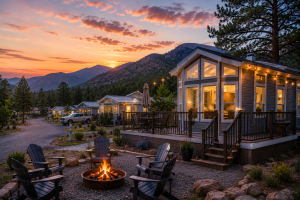
The East Mountains near Albuquerque are one of those places where the housing conversation goes differently than it does anywhere else. The elevation, the views, the access to the Sandia Mountains, and the Albuquerque commute range combine to make an extended RV or park model stay here something that genuinely functions as a housing alternative rather than just a camping option.
The Setting: Why the East Mountains Specifically?
The East Mountains — the communities along I-40 east of Albuquerque, including the Tijeras area and the Cedar Crest/Edgewood corridor — offer something that’s genuinely rare in the Albuquerque market: a mountain setting with city access at a significantly lower land cost than the Albuquerque valley floor.
RV parks and extended-stay facilities in the East Mountains benefit from this geography directly. You’re in piñon-juniper and ponderosa pine woodland at 6,000 to 7,000 feet elevation rather than the high-desert valley floor at 5,300 feet. The temperature difference in summer is real and significant — 10 to 15°F cooler than the city on hot afternoons. The sky quality at night is meaningfully better than the valley floor due to lower ambient light. And the Sandia Mountain trail system, the Cibola National Forest, and the Tijeras Canyon corridor are your immediate outdoor environment rather than something you drive to.
“There’s a specific quality to living in the East Mountains that you don’t get from visiting. The mornings are cooler, the nights are darker, and the mountains are right there instead of something you see from the highway.”
Park Model Living in New Mexico: What the Product Actually Provides
A park model is a factory-built residential unit regulated under the ANSI A119.5 recreational park trailer standard — limited to 400 square feet of primary living space, built to residential standards of insulation, finishes, and fixtures. The 400-square-foot limit places it in the recreational vehicle regulatory category rather than manufactured housing, which affects financing, placement, and the permits required.
Within that 400 square feet, a modern park model provides a genuine residential experience: a full-size kitchen with standard appliances, a bathroom, a bedroom that accommodates a full or queen bed, and a living area. Many New Mexico park model installations add a screened porch or sunroom that expands the usable living space meaningfully while taking advantage of the East Mountains’ outdoor-capable climate through most of the year.
The outdoor connection is part of what makes park model living in New Mexico work in a way that the same unit in a less outdoor-oriented climate wouldn’t. The East Mountains’ 300+ days of sunshine and the mild three-season outdoor weather (spring through fall) produce a lifestyle where the indoor 400 square feet is regularly supplemented by outdoor living space that the climate supports without climate control equipment. The outdoor space is part of the functional living area in a way that matters for quality of life in a smaller unit.
Long-Term RV Living in the East Mountains: The Alternative Path
For those who already own an RV, the long-term RV lot near Albuquerque model provides an even more flexible entry point to extended mountain living. A monthly full-hookup site — electric, water, sewer — places the rig in the East Mountains setting with full utility service at a monthly cost that’s typically significantly lower than apartment rental in the Albuquerque market.
The specific appeal for workers commuting to Albuquerque: the I-40 east corridor is one of the more predictable commute routes in the metro. The drive from the Tijeras area to central Albuquerque is 20 to 25 minutes in normal traffic — comparable to intra-city Albuquerque commutes from the far North Valley or the Westside, and shorter than commutes from many Albuquerque suburbs. The tradeoff is the mountain setting, the cooler temperatures, and the lower housing cost in exchange for a drive that’s straightforward and manageable.
Winter in the East Mountains
The East Mountains at 6,000 to 7,000 feet get real winter — occasional snowfall, nights in the teens and single digits during cold fronts, and the general cold that comes with mountain elevation in northern New Mexico. This is different from the Albuquerque valley floor winter and is the main practical adjustment for full-time East Mountains RV or park model residents who haven’t lived at this elevation year-round before.
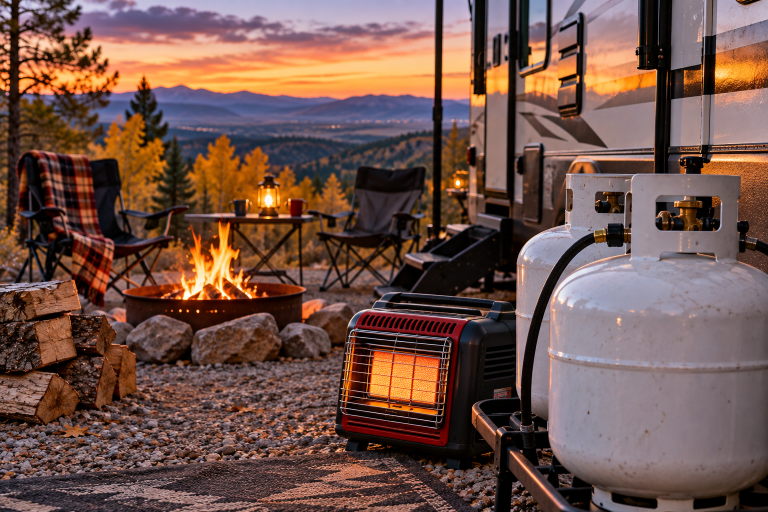
The preparation for East Mountains winter in an RV is similar to what any cold-climate RV living requires: 30-amp or 50-amp electric service (50-amp preferred for heating loads), a rig with adequate insulation for sustained cold, skirting to prevent under-rig freeze, and a heated water hose for the outdoor water connection. Park models are typically better insulated than standard travel trailers and handle mountain cold reasonably well; a propane or electric heating system with adequate BTU capacity for the temperature range is the practical minimum. This is doable and done by thousands of East Mountains and northern New Mexico residents year-round — it just requires the right preparation rather than assuming valley-floor winter conditions.
The Financial Picture: What Does This Actually Cost?
The financial case for extended stay RV living in New Mexico near Albuquerque depends on the accommodation type and what you’re comparing it to.
Monthly full-hookup RV sites in the East Mountains/Albuquerque area run $400 to $700 per month at established parks. Compare this to one-bedroom apartment rents in Albuquerque, which have climbed to $900 to $1,400 per month depending on area and quality, with two-bedrooms running $1,200 to $1,800. The monthly site plus the cost of a used RV amortized over the stay period often produces a total monthly housing cost meaningfully below the apartment alternative — particularly for residents who already own a rig.
Park models run $50,000 to $120,000 new from established manufacturers, placed on leased lots at monthly fees of $400 to $700. The financing options for park models — personal property loans (chattel loans) rather than conventional mortgages — carry higher rates than conventional mortgage financing, typically 7-12% depending on the lender and the borrower’s credit profile. For buyers who can pay cash or who have assets to leverage at lower rates, the economics are more favorable than the chattel loan rate structure suggests.
Who This Actually Works For
Long-term RV and park model living in the East Mountains is the right housing model for a specific set of people, and it’s worth being honest about who that is.
It works well for: solo workers or couples without school-age children who can leverage the lower housing cost and the mountain setting; remote workers whose commute requirement is zero or occasional; people who specifically value the Sandia Mountain access and outdoor lifestyle over square footage; and anyone who has made the transition from house or apartment living to RV or park model living and discovered that the smaller footprint is genuinely comfortable rather than limiting.
It works less well for: families with school-age children who need stable enrollment and access to activities; people for whom the East Mountains winter requires winter driving on I-40 that creates meaningful safety concerns; and people who genuinely need more square footage than a park model or RV provides for their specific living situation.
Elevation: 6,000–7,000 feet. Cooler summers (10–15°F vs. Albuquerque valley). Real winters — temperatures below 20°F during cold fronts.
Albuquerque commute: 20–25 minutes via I-40.
Monthly RV site: $400–700 for full hookups. Well below Albuquerque apartment market.
Park models: $50,000–120,000 new, lot fees $400–700/month. Chattel loan financing 7–12%.
Best suited for: solo adults, couples, remote workers, outdoor-oriented residents.
Key preparation for winter: 50-amp service, skirting, heated water hose, adequate BTU capacity.
For anyone exploring what extended living in the East Mountains near Albuquerque looks like — the full lifestyle picture, the outdoor activities, the city access, and the community character — the Albuquerque area community and long-stay lifestyle guide covers the extended-stay picture specifically. The RVing and New Mexico travel resource gives the broader regional context for RV living in New Mexico. For RV park options elsewhere in New Mexico, the RV park in New Mexico guide covers the state’s options. For specific questions about long-term availability and lot options near Albuquerque, the Albuquerque RV Park contact page connects you directly. And for everything about planning an extended stay, Albuquerque RV Park is the starting point.
Frequently Asked Questions
Can I live year-round in an RV in the East Mountains near Albuquerque?
Yes. Year-round RV living in the East Mountains requires cold-weather preparation appropriate for 6,000 to 7,000-foot elevation winter conditions — temperatures can drop into the teens and single digits during cold fronts, with occasional significant snowfall. The required preparation includes 50-amp electric service for heating loads, a rig with adequate insulation and heating capacity for the temperature range, skirting to prevent under-rig freeze, and a heated water hose for the outdoor water connection. Thousands of New Mexico residents live year-round in RVs and park models at East Mountains elevation — it requires the right preparation rather than being inherently impractical.
How does RV or park model living compare financially to renting in Albuquerque?
For residents with their own RV, the financial comparison is typically favorable. Monthly full-hookup RV sites in the East Mountains area run $400 to $700 per month, compared to Albuquerque one-bedroom apartment rents of $900 to $1,400 per month. The total housing cost for an RV resident (site rate plus amortized rig costs) is typically meaningfully below the comparable apartment cost, particularly for those who already own a rig. Park model living involves higher upfront costs ($50,000 to $120,000 for the unit) but produces lower monthly carrying costs once placed — the monthly lot fee plus loan payment can be competitive with apartment rental depending on the financing structure and down payment.
What is the commute from the East Mountains to Albuquerque?
The I-40 east corridor from the Tijeras area to central Albuquerque is approximately 12 to 15 miles, with a typical commute time of 20 to 25 minutes in normal traffic. The eastbound I-40 commute from Albuquerque to the East Mountains in the evening is generally predictable; the westbound morning commute into the city can see heavier traffic during peak hours but remains manageable compared to many intra-city commutes. The Cedar Crest and Edgewood communities further east add 10 to 20 minutes to this baseline. For remote workers whose commute requirement is occasional, the I-40 distance from the East Mountains to Albuquerque is a minor logistical factor rather than a meaningful daily burden.
What makes the East Mountains specifically appealing for extended RV living?
The East Mountains offer a combination of characteristics that’s unusual in the Albuquerque area: mountain woodland setting (piñon-juniper and ponderosa pine at 6,000 to 7,000 feet), significantly cooler summer temperatures than the valley floor, better night sky quality due to lower ambient light, immediate access to the Cibola National Forest and Sandia Mountain trail system, and lower land costs than comparable mountain communities in other western states. The combination of the outdoor environment and the Albuquerque city commute range makes extended East Mountains RV living a genuine housing alternative for outdoor-oriented adults who value the setting over the proximity to city amenities.
How do I finance a park model in New Mexico?
Park models on leased lots don’t qualify as real property for conventional mortgage financing because the land isn’t owned. Financing options include personal property loans (chattel loans) through lenders who specialize in manufactured and park model housing — these typically carry interest rates of 7% to 12% depending on the borrower’s credit profile and the lender. Manufacturer or dealer financing programs from the selling dealer are another option. For buyers with equity in other assets, home equity or personal loans at more favorable rates can reduce the financing cost. The financing complexity for park models is greater than for conventional mortgages; working with a lender who specifically understands park model and manufactured housing financing produces better outcomes than approaching a general mortgage lender.
Are there long-term RV sites available near Albuquerque in the East Mountains?
Yes. The I-40 East Mountains corridor has RV park options with monthly rates for extended stays. Albuquerque RV Park at the base of the Sandia Mountains is the most fully developed option on the east side of the city with full hookup sites and the mountain setting that makes the East Mountains location appealing. Availability for monthly sites varies with demand and seasonal patterns — contacting the park directly to confirm current availability and rates is the right approach before making any relocation decision around a specific site. The contact page at the park provides the most direct path to availability information.