Albuquerque’s commercial corridors have plenty of hotel rooms. What they don’t have is a mountain at the end of the driveway, a genuine night sky, and the specific cool-morning quality that the East Mountains produce in a way that 5,000-foot valley elevation simply doesn’t.
The Elevation Difference: Why It Matters More Than You’d Think
The Albuquerque city proper sits at approximately 5,300 feet above sea level on the Rio Grande valley floor. The Tijeras area and the East Mountains communities sit at 6,000 to 7,000 feet — a 700-to-1,700-foot elevation gain that produces a meaningfully different climate, particularly in summer.
In June, July, and August, when the valley floor can hit 95°F to 100°F in the afternoons, the East Mountains are typically 10 to 15°F cooler. A 100°F afternoon in the valley corresponds to roughly an 85°F to 88°F afternoon at Tijeras elevation — a significant difference in outdoor comfort. Nights in the East Mountains cool into the 50s even in midsummer, producing the kind of sleeping temperature that city accommodation at valley floor elevation doesn’t consistently deliver without air conditioning running all night.
For travelers who are visiting New Mexico specifically for outdoor activities — hiking, cycling, Sandia tram access — the East Mountains base isn’t just more comfortable. It’s closer to where the activities actually are. You’re already in the mountain environment rather than driving up from the valley.
“Staying in the East Mountains instead of the valley is the difference between looking at the Sandias from below and waking up inside them. That’s not a subtle distinction.”
Sandia Mountain Access: What the East Mountains Position Gives You
The mountain RV resort near Albuquerque positioning is most clearly demonstrated by the Sandia Mountain access it enables. The Cibola National Forest, which encompasses the Sandia Mountains, is entered via the Tijeras Canyon corridor on I-40 and via the Sandia Crest Scenic Byway on NM-536 — both of which begin in or adjacent to the Tijeras area.
What that means practically: Sandia Crest National Scenic Byway (NM-536) begins at Tijeras, climbing 14 miles through the Cibola National Forest to Sandia Crest at 10,678 feet. The drive is one of the more dramatic paved mountain drives in New Mexico — from piñon-juniper scrub at the base through ponderosa pine and mixed conifer forest to the subalpine zone near the crest, with views across the Albuquerque basin and east to the Great Plains on clear days.
Tijeras Canyon itself — the gap between the Sandia and Manzanita Mountains through which I-40 and historic Route 66 run — has its own trail access, creek access in some sections, and the general character of a mountain canyon that valley accommodation doesn’t provide as an immediate walking-out-the-door option.
Hiking Directly from the East Mountains
The Cibola National Forest trail system in the Sandia Mountains is accessible without a drive from East Mountains accommodations in a way that can’t be said of city-based lodging. The Tree Spring Trail, the Faulty Trail, the Otero Canyon Trail, and the Canoncito Trail system all access the Sandia foothills from the eastern approach with lower crowds than the western slope Tramway and Elena Gallegos access points popular with city residents. These are genuine mountain trails in ponderosa pine and mixed conifer terrain, not interpretive nature walks — a different character from the urban edge hiking the city-side approach areas provide.
The Night Sky Advantage
Albuquerque is a city of 600,000 people that produces the ambient light pollution any substantial urban area produces. The East Mountains, while not in a certified dark sky area, have meaningfully less light pollution than the valley floor — enough that the Milky Way is visible on clear nights in a way that the city corridors don’t allow, and enough that the night sky quality genuinely adds to the experience of being in New Mexico, which is a state that takes its dark sky heritage seriously.
For travelers who prioritize the overhead view alongside the mountain view, the East Mountains position wins consistently over valley-floor lodging. The combination of the Sandia Mountains to the west (lit by the Albuquerque metro at night in the particular way that cities light mountain faces) and the darker eastern sky produces a night environment specific to this transitional mountain-to-plains zone that you don’t find in the city.
The City Access Question: How Far Is Too Far?
The most common objection to Tijeras accommodations over city-based lodging is the distance from Albuquerque’s city attractions. It’s a real consideration, not a dismissal. Tijeras is approximately 12 to 15 miles east of central Albuquerque via I-40 — about 20 to 25 minutes on the interstate in normal traffic conditions. The East Mountains communities (Cedar Crest, Edgewood, Moriarty heading further east) add additional distance but are still on I-40 access.
The 20-to-25-minute drive is manageable for a trip where city activities are planned day-trip events rather than the primary reason for the accommodation location. Old Town, the museums, the Sandia Tram on the west face, Nob Hill restaurants — these are all destinations you drive to regardless of whether you’re staying in the East Mountains or in a city hotel, because you’re not walking to them from any reasonable lodging location. The difference in drive time from a city hotel to Old Town versus from Tijeras to Old Town is typically 10 to 15 minutes — less than the difference between parking options at Old Town itself on a busy weekend.
When City Lodging Is Actually Better
One situation where city lodging wins clearly: a business trip with multiple city appointments, where driving in and out of the mountains adds friction to a schedule built around the city. For leisure travel with a city day-trip component, the East Mountains base is the better experience with a minor commute trade-off. Being honest about which category your trip falls into is the decision framework.
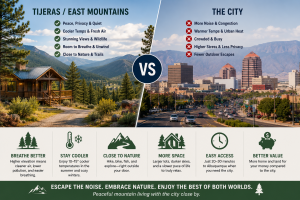
Outdoor-focused trip (Sandia hiking, cycling, mountain driving): East Mountains wins clearly. 15-20 minutes closer to the mountain access, 10-15°F cooler in summer, trail access from the property.
City-focused leisure trip (museums, restaurants, Old Town): city lodging is more convenient, 15 min less driving per city excursion.
Extended stay or full-season RV: East Mountains offers the quality-of-life experience that valley-floor commercial corridors don’t, with city access for planned excursions.
Business trip with Albuquerque appointments: city lodging is the practical choice.
For RV travelers exploring the full New Mexico route and considering where Albuquerque fits into a longer journey, the RVing and Southwest travel resource at Albuquerque RV Park covers the broader regional picture. The Albuquerque community and extended-stay lifestyle overview addresses what a longer stay in the area actually involves. Travelers continuing west toward Grants can find options on the RV park in Grants, NM page. And for planning your East Mountains area base near Albuquerque, Albuquerque RV Park is the starting point.
Frequently Asked Questions
How far is Tijeras from downtown Albuquerque?
Tijeras is approximately 12 to 15 miles east of central Albuquerque via I-40 east. The drive typically takes 20 to 25 minutes in normal traffic. The I-40 corridor is the main connection, running through Tijeras Canyon between the Sandia and Manzanita Mountains. Traffic on I-40 east of Albuquerque is lighter than the metro’s internal traffic and significantly lighter than the westbound I-40 approach into the city during peak commute hours. East Mountains communities further east — Cedar Crest, Edgewood — add additional distance but remain on I-40 and are typically 30 to 40 minutes from central Albuquerque.
Is it cooler in the East Mountains than in Albuquerque in summer?
Yes, significantly. The Tijeras area sits at approximately 6,000 to 6,500 feet compared to Albuquerque’s 5,300 feet, producing a roughly 10 to 15°F lower temperature in the afternoons during summer. When the valley floor reaches 95°F to 100°F in July and August, the East Mountains are typically in the low-to-mid 80s. Nights cool into the low 50s even in midsummer at East Mountains elevation. This temperature difference is one of the primary appeals of East Mountains accommodation for summer visitors, particularly those planning hiking or outdoor activities in the Sandia Mountains where the cooler starting temperatures allow longer outdoor activity windows before heat becomes limiting.
What are the best hiking trails accessible from the Tijeras area?
The Tijeras and East Mountains area has direct access to the Cibola National Forest trail system in the Sandia and Manzanita Mountains. The Tijeras Canyon area provides access to the Otero Canyon Trail and the Canoncito Trail system on the eastern slope of the Sandias — less visited than the western slope approaches popular with Albuquerque residents. NM-536 (Sandia Crest Scenic Byway) begins near Tijeras and provides access to the Tree Spring Trail, Faulty Trail, and crest-level trails including the Crest Trail (10K Trail) at the top. The eastern approach trails are generally in ponderosa pine and mixed conifer terrain at 7,000 to 10,000 feet. Trail conditions and access are best confirmed through the Cibola National Forest website at fs.usda.gov/cibola before visiting.
Is there RV camping near Tijeras and the East Mountains?
Yes. The East Mountains and Tijeras Canyon area has RV accommodation options in the I-40 corridor east of Albuquerque. Cibola National Forest campgrounds in the Sandia Mountains provide dispersed and developed camping at higher elevations, with some accommodating RVs (Cibola NF campground facilities vary; check the Cibola National Forest website for current specifics). Commercial RV parks in the East Mountains area provide full-hookup alternatives with city-access convenience. Albuquerque RV Park at the base of the Sandia Mountains on the east side of Albuquerque is the most fully equipped option with full hookups and immediate mountain-view positioning, providing a base for both East Mountains access and city day trips.
What is Tijeras, New Mexico known for?
Tijeras (Spanish for “scissors”) is a small community in Bernalillo County at the intersection of Tijeras Canyon and the Sandia and Manzanita Mountains. The town is known for its location at the gateway to the Sandia Mountains and the Cibola National Forest, the intersection of I-40 and NM-536 (Sandia Crest Scenic Byway), and its position at the transition between the high desert of the Albuquerque basin and the forested mountain terrain of the Sandia range. Tijeras is a small community of a few thousand residents without a large commercial center — its appeal is primarily the natural setting and the outdoor access it provides rather than town-based attractions.
What is the Sandia Crest Scenic Byway and is it worth driving?
The Sandia Crest National Scenic Byway (NM-536) is a 14-mile paved road that climbs from the Tijeras Canyon area to Sandia Crest at 10,678 feet, making it one of the highest paved roads in New Mexico. The drive passes through five distinct vegetation zones — from piñon-juniper at the base through ponderosa pine, mixed conifer, and spruce-fir forest to the subalpine krummholz near the crest — providing one of the most ecologically diverse short drives in the Southwest. The crest offers views of the Albuquerque basin, the Rio Grande valley, and on clear days east to the Great Plains. Several trailheads along the byway access the Sandia Mountain trail system. The byway is free to drive (no entry fee as of recent visits; confirm current status at fs.usda.gov/cibola) and is open year-round in good weather, though winter snowfall can close upper sections.