
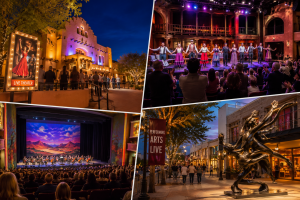
Albuquerque after dark is a different city. The desert cools, the stars come out, and the curtain goes up on a performing arts scene that most visitors don’t even know exists.
This guide walks through the best options for live theater in Albuquerque, NM and beyond — the venues, the types of performances worth seeking out, and practical tips for RV travelers who want their evenings to be as good as their days.
Why Albuquerque Has a Surprisingly Rich Arts Scene
To appreciate what’s here, it helps to understand why it exists at all. Albuquerque sits at the intersection of cultures that have been layering over each other for centuries — Pueblo peoples, Spanish colonists, Mexican settlers, Anglo-American arrivals, and waves of artists and creatives drawn to the light and landscape of the high desert. That kind of cultural density doesn’t just show up in the food and architecture. It shows up on stage.
The University of New Mexico adds another dimension — a research university in the middle of a mid-sized city brings faculty, students, visiting artists, and institutional investment in the arts that communities of Albuquerque’s size don’t always have. The Popejoy Hall, which sits on the UNM campus, is a genuinely world-class venue that brings touring Broadway productions, major orchestras, and international performers through on a regular basis.
Put all of that together and you get a city where on any given weekend there are multiple legitimate evening shows in Albuquerque worth choosing between. The challenge for visitors isn’t finding something — it’s deciding what to prioritize.
“Albuquerque’s arts scene doesn’t announce itself loudly. It’s the kind of thing you discover when you slow down long enough to look at what’s actually happening around you.”
Major Performing Arts Venues Worth Knowing
Popejoy Hall — UNM Campus
This is the anchor venue for large-scale performing arts in Albuquerque. Popejoy seats around 1,985 people and has hosted everything from Broadway touring productions to the New Mexico Philharmonic to internationally recognized dance companies. The programming calendar runs September through May and tends to be genuinely ambitious for a city this size.
If you’re in the area and there’s something at Popejoy, go. The acoustics are good, the sightlines are good, and the tickets are typically priced well below what you’d pay for comparable shows in larger markets. It’s one of those venues that locals sometimes take for granted until someone from out of town points out how lucky they are to have it.
Kimo Theatre — Downtown
The KiMo is one of the more remarkable buildings in the Southwest. Built in 1927 in a Pueblo Deco style that blends Native American and Art Deco influences in ways that shouldn’t work but absolutely do, it’s been a performing arts venue, a movie palace, and a cultural landmark for nearly a century. The interior alone — with its painted murals, Navajo rug-inspired ceilings, and skulls-and-longhorns light fixtures — is worth seeing even if you aren’t catching a show.
Programming at the KiMo skews eclectic. Local theater companies, visiting performers, film screenings, and community events all use the space. Check the calendar when you’re in town — there’s usually something interesting on the board.
Albuquerque Little Theatre
Founded in 1930, the Albuquerque Little Theatre is one of the oldest community theater organizations in the American Southwest. The company produces a full season of shows — comedies, dramas, musicals — in their purpose-built venue near Old Town. The production quality is consistently strong, and tickets are usually very accessible in price. For travelers who want a genuine evening of local performances in New Mexico rather than a touring production, this is a great option.
South Broadway Cultural Center
This city-operated venue hosts a range of performing arts programming with a particular emphasis on multicultural and community-rooted work. Dance, theater, music — the South Broadway calendar reflects a commitment to the full range of Albuquerque’s cultural communities. It’s a slightly less polished environment than Popejoy or the KiMo, but the programming is often more interesting precisely because of that freedom.
Beyond the Main Stage: Smaller and Outdoor Experiences
Some of the best cultural entertainment in Albuquerque doesn’t happen in traditional theater spaces at all.
National Hispanic Cultural Center
The NHCC is one of the most important cultural institutions in New Mexico and one of the most undervisited by out-of-town travelers who stick to the tourist circuit. The complex includes performance spaces, gallery exhibitions, and a film program — all centered on the art, history, and culture of Hispanic communities in the Americas. The main theater seats over 700 and hosts everything from flamenco performances to contemporary dance to literary events. If you visit one cultural institution in Albuquerque beyond the obvious landmarks, make it this one.
Rodey Theatre — UNM
Smaller and more intimate than Popejoy, Rodey Theatre on the UNM campus is where the university’s theater department presents its productions. The work here ranges from classic plays to contemporary pieces to experimental work — and the student productions are frequently excellent. Tickets are inexpensive and the schedule runs through the academic year.
Outdoor and Festival Performances
Summer in Albuquerque brings outdoor performance options that take advantage of the city’s extraordinary setting. Shakespeare in the Park, outdoor concert series, and festival events throughout the warmer months make the city’s public spaces into performance venues. The New Mexico Jazz Festival, held annually at the Albuquerque Balloon Fiesta Park and other outdoor venues, draws national acts and draws thousands of attendees who didn’t necessarily come to Albuquerque for jazz — and leave converted.
Practical Notes for RV Travelers Heading Out for an Evening
Planning an evening out from an RV park requires a little more thought than stepping out from a hotel downtown. Here’s what makes RV nightlife activities in Albuquerque work smoothly.
Parking downtown and near the UNM campus is generally manageable but can be tight on high-attendance nights. Most of the major venues have nearby parking structures or lots — check the venue website for recommended parking before you go. Alternatively, rideshare availability in Albuquerque has improved significantly and is usually reliable for evening trips from the university district or downtown areas.
Dress code in Albuquerque arts venues is casual by the standards of larger cities. People dress up if they feel like it, but you won’t feel out of place in clean jeans and a decent shirt at Popejoy or the KiMo. The culture here is generally relaxed and welcoming — very much in keeping with the broader character of the city.
The best approach is to check venue calendars in the week or two before your arrival and build an evening or two of shows into your broader Albuquerque itinerary. Most of the major venues sell tickets online without significant hassle, and you can usually find availability unless you’re targeting the most popular productions of the season.
For a solid home base close to the action, Albuquerque RV Park puts you in a genuinely convenient position for getting into the city for evening shows without making the logistics complicated. That proximity matters more than people realize when you’re trying to catch an 8 p.m. curtain.
The Broader Cultural Picture in Albuquerque
Theater and performing arts are one slice of what makes Albuquerque a rewarding place to spend time. The city’s cultural identity runs deep — rooted in Native history, Spanish colonial heritage, and a contemporary creative community that punches well above its weight for a city of 500,000.
For travelers who want to understand Albuquerque more fully — not just the performing arts but the broader texture of living here — there’s honest, detailed content on what life in Albuquerque is actually like that’s worth reading before or during your stay. It changes how you experience the city when you approach it as a temporary resident rather than a tourist moving through.
And for travelers who are newer to extended RV living and still figuring out how to make the most of stops like Albuquerque, the RV travel lifestyle guide has practical content on how to settle into a new place, find things to do, and get the most out of longer stays.
If you want to go deeper into everything Albuquerque has to offer beyond the performing arts — the food scene, the outdoor recreation, the cultural institutions, the day-trip options into the surrounding New Mexico landscape — exploring Albuquerque and the surrounding region is a solid resource for planning your time here.
One Last Thing About Albuquerque Evenings
There’s something specific about an evening in Albuquerque that’s hard to fully articulate until you’ve experienced it. The air cools fast once the sun drops behind the West Mesa. The sky turns colors that genuinely don’t have names. And then — if you’re sitting in the KiMo watching the lights come up on a stage that’s been hosting performances since 1927, or standing outside Popejoy listening to an orchestra warm up through the lobby doors — you get a sense of place that the daytime version of this city doesn’t quite deliver in the same way.
The performing arts here aren’t an afterthought or a tourist amenity. They’re part of how Albuquerque understands itself. Worth showing up for.
Frequently Asked Questions
What is the best live theater venue in Albuquerque?
For large-scale productions including Broadway touring shows and major orchestral performances, Popejoy Hall on the UNM campus is the premier venue. For historic character and eclectic programming, the KiMo Theatre downtown is exceptional. For community theater with consistently strong production values, Albuquerque Little Theatre near Old Town is the long-standing choice. Each serves a different kind of evening out.
Are there outdoor performing arts events in Albuquerque?
Yes, particularly in summer. Shakespeare in the Park, the New Mexico Jazz Festival, and various outdoor concert series take advantage of Albuquerque’s climate and public spaces through the warmer months. The Balloon Fiesta in October also brings significant live entertainment programming to the city. Checking local event calendars in the weeks before your visit is the best way to catch what’s coming up during your specific stay.
Is the National Hispanic Cultural Center worth visiting for performing arts?
Absolutely. The NHCC is one of the most significant cultural institutions in the Southwest and consistently presents high-quality performing arts programming centered on Hispanic culture, art, and history. The main theater seats over 700, and the range of programming — flamenco, contemporary dance, music, literary events — is genuinely impressive. It’s one of the most undervisited major cultural institutions in Albuquerque among out-of-town travelers.
How do I get tickets to shows at Popejoy Hall or the KiMo Theatre?
Both venues sell tickets online through their respective websites and through ticketing platforms. Popejoy uses a season subscription model alongside single-ticket sales, so some of the most popular productions can sell out in advance. The KiMo sells tickets through the city of Albuquerque’s ticketing system. For both venues, buying a week or two ahead is advisable for popular shows, especially during peak visitor periods like Balloon Fiesta season.
What is the dress code for Albuquerque performing arts venues?
Albuquerque is relaxed by the standards of many cities. Most venues have no formal dress code, and audiences range from dressed-up to very casual at most performances. Clean, presentable clothes are fine for any venue in the city. People who want to dress up are welcome to, and people who come in after a day of outdoor activity won’t feel out of place.
Can I use rideshare to get to performing arts venues from an Albuquerque RV park?
Yes, rideshare is a practical option for evening trips into the city from nearby RV parks. Albuquerque has reasonable rideshare coverage, particularly for trips to and from the UNM campus area and downtown. For high-attendance nights at major venues, request your return ride a bit before the show ends rather than waiting for the crowd to disperse — availability and wait times can increase briefly right after curtain.